

Medical field
Product Center

Product description
Introduction:
Nickel flat wire is a type of metal wire with special properties, mainly composed of nickel (Ni) and titanium (Ti), formed into a flat cross-section through a specific process.
Surface Condition:
The surface condition of the wire is passivated, black and bright, bright, and lightly oxidized.
Features:
Shape memory: The preset shape can be restored by temperature changes.
Superelasticity: It automatically recovers after deformation under stress, with a large elastic range.
Corrosion resistance: The surface oxide film is corrosion-resistant and suitable for various environments.
Biocompatibility: Non-toxic, suitable for medical implantation scenarios.
Excellent mechanics: High strength, light weight, flat cross-section.
Size and Tolerance Range
| Thickness Range (mm) | Width Range (mm) | Thickness Tolerance (mm) | Width Tolerance (mm) |
| 0.025 - 0.05 | 0.4-2 | ±0.002 | ±0.01 |
| 0.05 - 0.3 | 0.4-2 | ±0.005 | ±0.01 |
| 0.3-1 | 0.4-5 | ±0.01 | ±0.05 |
| 1-2 | 0.4-5 | ±0.02 | ±0.05 |
Specific dimensions can be customized according to requirements
Chemical Composition
| Element Category | Element | Typical Content Range | Medical Grade Standard (e.g., ASTM F2063) | Common Industrial Grade Range | Effect on Performance |
| Main Elements | Nickel (Ni) | 54.5 - 57.0 | ≤57.0 | 54.5-58.0 | Determines the phase transformation temperature (Ni content ↑➡ phase transformation temperature ↑), affecting the performance of superelasticity and shape memory effect. |
| Titanium (Ti) | 43.0 - 45.51 (remainder) | ≥42.5 | 42.0-45.5 | Forms the Ni-Ti matrix with Ni; excess easily generates Ti. 2 Ni brittle phase, reduces ductility; ensures the basis of corrosion resistance and biocompatibility. | |
| Impurity Elements | Oxygen (O) | ≤0.10 | ≤0.05 | ≤0.15 | Forms oxides with Ti, increasing alloy brittleness and reducing plastic deformation ability; needs strict control (medical grade requirements are stricter). |
| Nitrogen (N) | ≤0.05 | ≤0.03 | ≤0.05 | Forms interstitial solid solution, increasing hardness but reducing toughness; excess leads to room temperature brittleness. | |
| Carbon (C) | ≤0.05 | ≤0.03 | ≤0.05 | Forms carbides with Ti (such as TiC), affecting phase transformation uniformity and leading to unstable mechanical properties. | |
| Iron (Fe) | ≤0.05 | ≤0.03 | ≤0.08 | Replaces Ni in the lattice, changing the phase transformation temperature (Fe content ↑➡ phase transformation temperature ↓), and reducing corrosion resistance. | |
| Hydrogen (H) | ≤0.005 | ≤0.002 | ≤0.005 | Causes hydrogen embrittlement, affecting the fatigue life of the alloy; environmental humidity needs to be controlled during melting and processing. | |
| Trace Elements | Molybdenum (Mo)/Niobium (Nb) | (Added in some special grades) | - | 0.1 - 0.5 (improves corrosion resistance) | Added to a few industrial-grade alloys to improve high-temperature corrosion resistance or adjust the phase transformation temperature; generally not added to medical grade. |
Comparison of Composition Differences in Different Application Scenarios
| Nickel Content Range | Focus of Impurity Control | Standard Basis | |
| Medical Implantation (such as stents) | 55.0 - 56.5 | O≤0.03%, N≤0.02%, C ≤0.02%, Fe≤0.02% | ASTMF206, ISO 5832-10 |
| Oral orthodontic wire | 55.5 - 57.0 | O≤0.05%, N≤0.03%, with a focus on controlling Fe and C | YY/T 0806-2010 (China Pharmaceutical Industry Standard) |
| Industrial room firmware / spring | 54.5 - 58.0 | Allowable O≤0.15%, N≤0.05%, with greater focus on cost control | Enterprise custom standard or GBA 20878-2007 |
Application scenarios
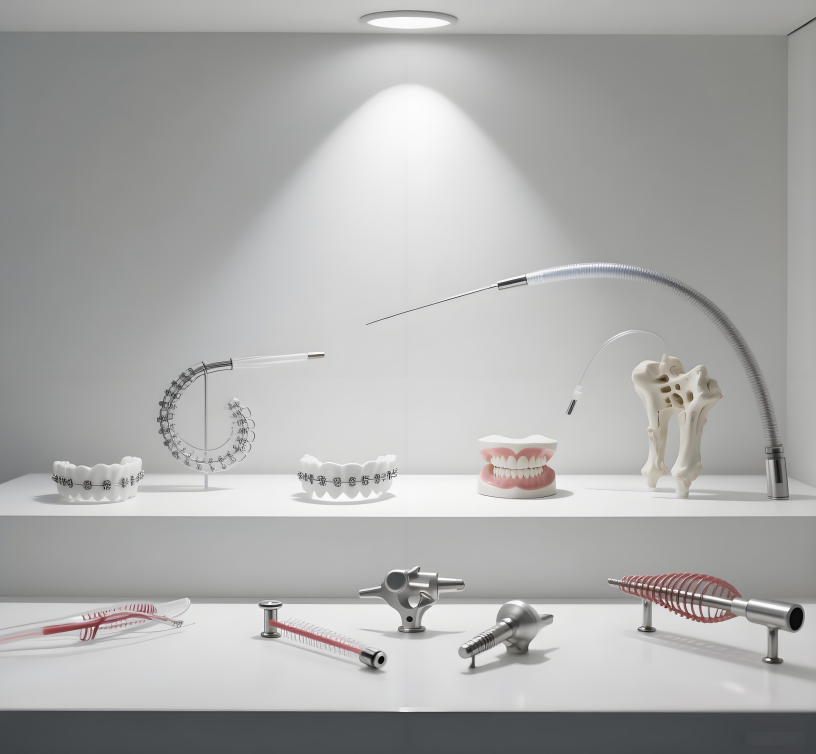
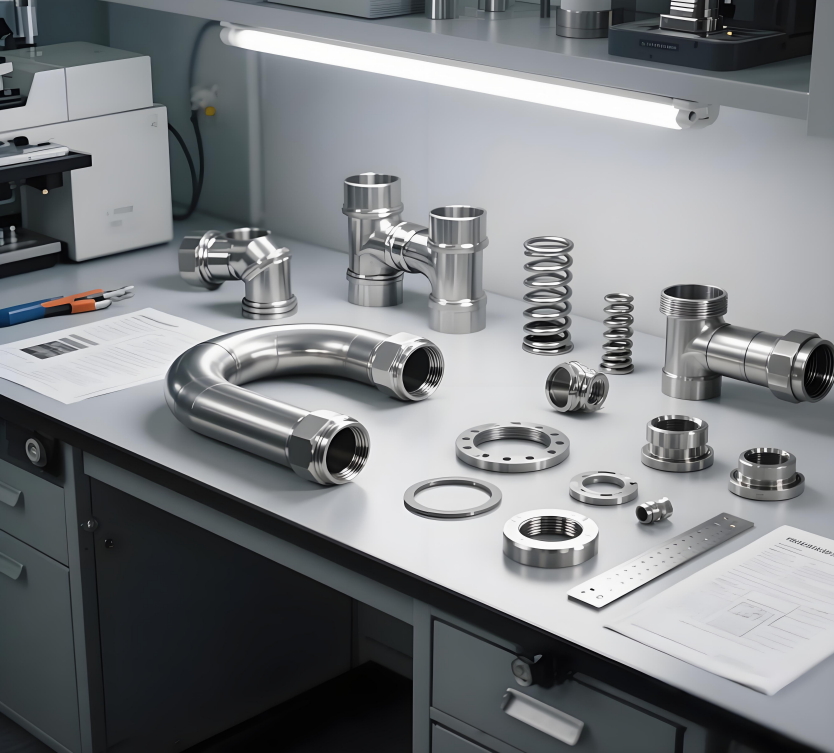
Industrial field
Wearable accessories field

Electronics technology

Next

Hotline:
Contact Email:
Address:
Building 19, Liandong U Valley, Sanhe Subdistrict, Huiyang District, Huizhou City, Guangdong Province, China
NiTinol -Titanium Memory Alloy Wire | NiTinol Spring | NiTinol - Fastening Ring


Follow WeChat
Add WeChat
Business License
Power by:www.300.cn | Tag | Privacy Policy | City List