

Applications of shape memory alloys in the automotive industry
志联
2024-02-12
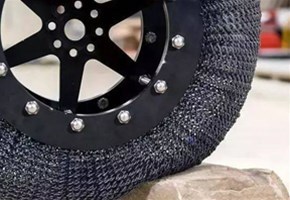 Applications of shape memory alloys in the automotive industry
The characteristics of shape memory alloys were discovered in the early 1950s, and alloys of gold, cadmium, indium, and thallium all exhibit these characteristics.
Shape memory alloys have been used in pipe connections and automated control. Shells made of shape memory alloys can replace welding. The method involves expanding the pipe ends by about 4% at low temperatures. During assembly, the sleeves are fitted together. Once heated, the contraction of the sleeves restores them to their original shape, forming a tight connection. The hydraulic systems of US Navy aircraft used 100,000 such connectors without leaks or damage for many years. Repairing damaged ship and subsea oil pipeline with shape memory alloy fittings is very convenient. In some places where construction is inconvenient, shape memory alloy pins are made and heated into holes. The tail end of the pin automatically separates and curls, forming a one-sided component.
Shape memory alloys are particularly suitable for thermomechanical and isothermal automatic control. A room temperature automatic opening and closing arm has been made. It can open ventilation windows on sunny days and automatically close them when the room temperature drops at night. There are many design schemes for shape memory alloy heat engines, which can work between two low-temperature difference media, thus opening up new ways to utilize industrial cooling water, nuclear reactor waste heat, ocean temperature difference, and solar energy. The current common problem is low efficiency, only 4%-6%, which needs further improvement.
Shape memory alloys have also attracted considerable attention in medical applications. For example, bone plates can not only fix two broken bones, but also generate compressive force during the process of restoring their original shape, forcing the broken bones to connect together. Orthodontic wires, clips for brain aneurysms and vasectomies, and support plates for spinal correction are all activated by body temperature after implantation. Thrombosis filters are also a new shape memory alloy product. After the corrected filter paper is implanted into the vein, the filter paper gradually recovers into a mesh shape, thus preventing 95% of blood clots from flowing into the heart and lungs.
An artificial heart is a relatively complex structure. Myofibrils made of shape memory alloys match the elastic membrane ventricle and can simulate ventricular contraction. Now the pumping has been successful.
Because shape memory alloys are a "living alloy," utilizing their shape change at a certain temperature, various automatic control devices can be designed, and their application range is constantly expanding.
Previous:
Related News

Hotline:
Contact Email:
Address:
Building 19, Liandong U Valley, Sanhe Subdistrict, Huiyang District, Huizhou City, Guangdong Province, China
NiTinol -Titanium Memory Alloy Wire | NiTinol Spring | NiTinol - Fastening Ring


Follow WeChat

Add WeChat
Business License
Power by:www.300.cn | Tag | Privacy Policy | City List