



2024/02/12
Have you noticed how a small titanium alloy spring has quietly changed our lives, bringing us great convenience and comfort?

2024/02/12
Applications of shape memory alloys
The characteristics of shape memory alloys were discovered in the early 1950s; gold, cadmium, indium, and thallium alloys all exhibit these characteristics.
2024/02/12
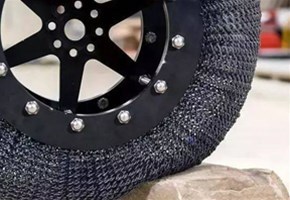
Applications of shape memory alloys in the automotive industry
The characteristics of shape memory alloys were discovered in the early 1950s; gold, cadmium, indium, and thallium alloys all exhibit these characteristics.
2024/02/12
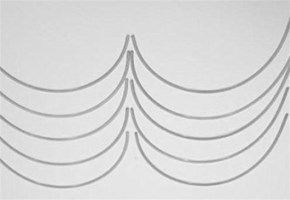
What are the advantages of using memory steel rings in bras?
The breast support mode is located in the lymph nodes richest in breasts. Due to the superelasticity of the nitinol memory alloy hoop, the breast's "zero compression" can improve blood flow, microcirculation, nutrient supply, metabolism, and the activation of mammary gland tissue cells.
2024/02/12
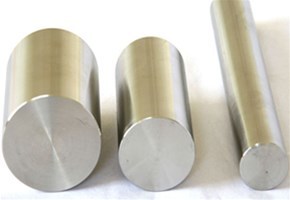
Characteristics and functions of NiTinol-titanium shape memory alloy
NiTinol shape memory material is a special material that integrates sensing and driving. NiTinol shape memory alloy is an important component of NiTinol shape memory material. A NiTinol-titanium shape memory alloy is an alloy that, after low-temperature plastic deformation, transforms its shape into another shape under a certain initial state. By heating, its temperature rises, and it transforms back to its original shape.
2024/01/31
Performance and processing of NiTinols in medical device applications
Binary NiTinol-titanium is now a preferred material for many medical devices, but there are challenges in manufacturing NiTinols into the required shapes and surface smoothness. In addition, the performance of binary NiTinol-titanium needs improvement, especially in terms of radiopacity, superelasticity, and fatigue limit. This will explore the development of NiTinols related to various equipment and new methods for improving performance and advanced manufacturing technologies.
2024/01/13
NiTinol is a binary alloy composed of NiTinol and titanium.
(1) Phase Transformation and Characteristics of NiTinol Simply put, NiTinol is a binary alloy composed of NiTinol and titanium. Due to changes in temperature and mechanical pressure, it exists in two different molecular structures, namely the austenite phase and martensite phase. The phase transformation sequence of NiTinol after cooling is parent phase (austenite phase) - R phase - martensite phase.
2024/01/05
I. How about NiTinol tubes? 1. The relative density of NiTinol is generally around 4.51 g/cubic decimeter, only 60% of steel. The hardness of titanium alloy is close to the density of general steel, and some high-toughness titanium alloys exceed the strength of many alloy structural steels. Therefore, the specific strength (compressive strength/relative density) of titanium alloy is much higher than that of other metal component raw materials, and the parts made have high strength, good rigidity, and light weight.
2019/02/28
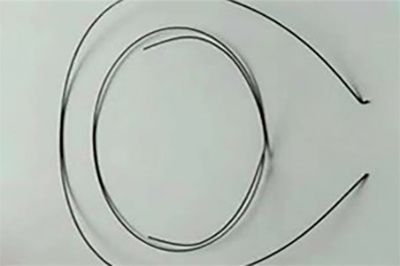
What are shape memory alloys? What are their functions?
Shape memory alloys are martensitic transformation alloys with a regular atomic arrangement and a volume less than 0.5%. The alloy deforms under external force. When the external force is removed, it can recover its original shape at a certain temperature. Because it has more than one million recovery functions, it is called "shape memory alloy"
Product Recommendation

Temperature control spring clip
Nickel-titanium superelastic wire
Nickel tube
Nickel retaining ring
Shape memory alloy spring
U-shaped retaining ring

Hotline:
Contact Email:
Address:
Building 19, Liandong U Valley, Sanhe Subdistrict, Huiyang District, Huizhou City, Guangdong Province, China
NiTinol -Titanium Memory Alloy Wire | NiTinol Spring | NiTinol - Fastening Ring


Follow WeChat
Add WeChat
Power by:www.300.cn | Tag | Privacy Policy | City List