



2025/11/18
Temperature Control Spring Clip: Intelligent Thermal-Responsive Mechanical Component
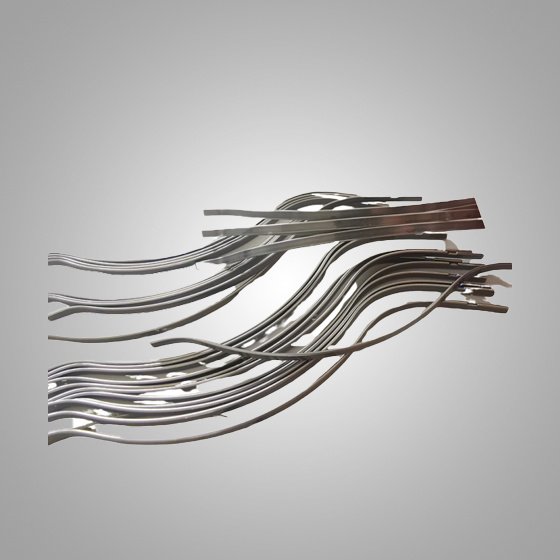
A thermo-responsive clip that changes its clamping force or shape with temperature variations, ensuring automatic protection, regulation, and stability in electrical, mechanical, and appliance systems.
2025/05/18
A Brief Discussion on the Characteristics of Shape Memory Alloys
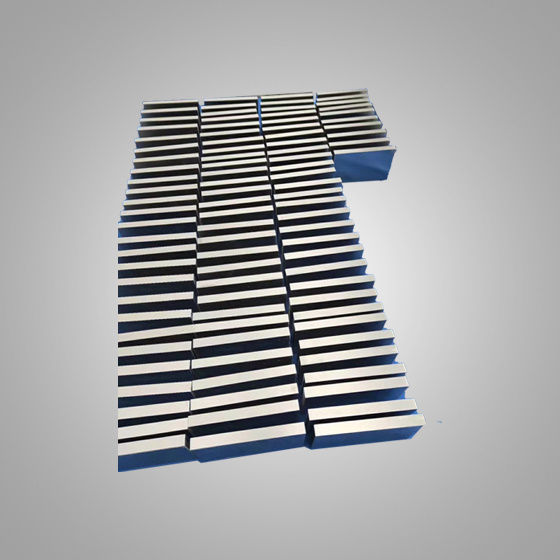
Memory metal is a special metal material that, after undergoing plastic deformation within a specific temperature range, can recover its original macroscopic shape within a different temperature range. It first appeared in the 1970s.
2025/05/08
A NiTinol wire material factory introduces the knowledge of shape memory alloys.
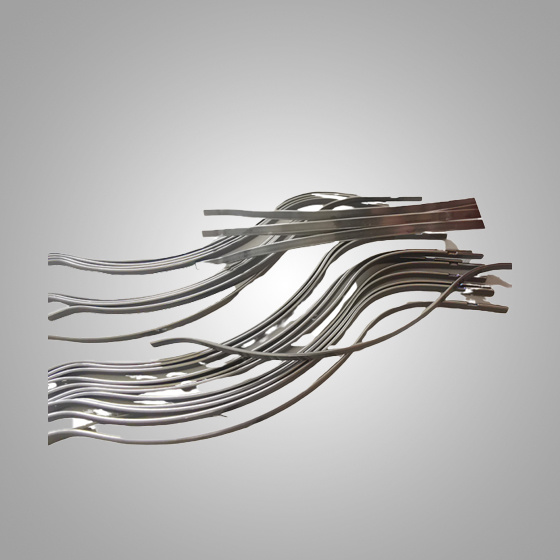
Energy development is an important application area for shape memory alloys. Today, the NiTinol wire material factory introduces the knowledge of shape memory alloys for you. Let's learn about it together!
2025/05/06
Industrial Applications of Shape Memory Alloys 1. Unidirectional shape recovery utilizing the unidirectional shape memory effect, such as in pipe fittings, antennas, and clamps. 2. External bidirectional memory recovery. That is, utilizing the unidirectional shape memory effect, with the assistance of external force, repeated actions with temperature increase and decrease can be performed, such as in thermosensitive components, robots, and terminals. 3. Internal bidirectional memory recovery, i.e., utilizing the bidirectional shape memory effect. Repeated actions are performed with temperature increase and decrease, such as in heat engines and heating elements. However, this type of application has rapid memory decay and poor reliability, and is not commonly used.

2025/04/26
NASA uses shape memory alloy to create a new type of foldable wing
According to foreign media reports, NASA considers foldable wings a key aerospace technology for the future. To achieve this goal, the space agency has begun searching for an advanced, lightweight shape memory alloy. A suitable option has recently emerged: a new alloy developed by the Spanwise Adaptive Wing project that allows wings to control their surfaces and change shape without the need for heavy hydraulic systems. Aircraft wings have undergone a long history of development, evolving from early spruce wood and canvas to increasingly complex materials. While significant technological updates have been achieved, their efficiency remains somewhat limited. If wings could become more "rubber-like," capable of transforming into various shapes, they could adapt to a wider range of flight conditions. This idea has actually been around for a while, but the problem is that the hydraulic systems required for foldable wings are too heavy and energy-consuming, outweighing their advantages. To address this, NASA's Armstrong Flight Research Center, Glenn Research Center, Langley Research Center, Boeing Research & Technology, and Area-I Inc. jointly developed an actuator to replace existing hydraulic systems and engine brakes. This actuator will reduce weight by 80% and operate using shape memory alloys. Recently, NASA conducted a series of flight tests at Rogers Dry Lake in Edwards Air Force Base, California. During the tests, they used a remotely controlled prototype technology assessment research aircraft (PTERA). It is understood that the PTERA's wings can fold from 0 to 70 degrees during flight. In addition to carbon composite materials, the drone also uses a large number of telemetry devices and sensors. Typically, shape memory alloys are deformed by heating. In the tests, heating tubes on the wings caused the outermost sections of the wings to bend upwards or downwards. Jim Mabe, a technician from Boeing Research & Technology, said that the new alloy jointly developed with NASA performed exceptionally well, exhibiting stability from the initial testing phase to flight tests and surpassing previous materials. According to information provided by NASA, wings with foldable capabilities will one day be lighter, simpler, more slender, more stable, and more fuel-efficient. Furthermore, they will make supersonic flight easier.

2025/04/26
Shape memory alloy tires: A new technological revolution
On December 11, 2017, NASA announced a new non-pneumatic tire made from shape memory alloy. This tire is lighter, stronger, safer, and can be used on various harsh terrains. In the future, in addition to use in Mars exploration missions, it can also serve as a replacement for traditional tires on Earth. NASA stated that this revolutionary product, called the "Superelastic Tire," was jointly developed by NASA's Glenn Research Center and Goodyear. Its inspiration comes from the tires used on the lunar rovers of the Apollo program. The use of shape memory alloy as a radial material also increases the tire's load-bearing capacity. Compared to traditional tires, the "Superelastic Tire" reduces the possibility of a blowout, thus improving driving safety. Furthermore, the tire's design reduces the need for an inner liner, simplifying tire assembly and reducing weight. It also reduces the energy transmitted to the vehicle during operation. In addition to being installed on Mars rovers like Curiosity for space missions, this tire can also be used on various vehicles and aircraft on Earth, including military vehicles, passenger cars, heavy equipment vehicles, agricultural vehicles, and all-terrain vehicles (ATVs), to adapt to various terrain needs. Currently, the Curiosity rover's tires are made of solid aluminum. While strong, they are not sufficient to prevent blowouts or tread damage. The "Superelastic Tire" will allow rovers like Curiosity to carry heavier equipment and explore wider areas on Mars or the Moon. The "Superelastic Tire" is made of shape memory alloy and can travel smoothly over uneven ground. When the tire encounters a protruding object like a rock, it temporarily deforms to accommodate it and then returns to its original shape without permanent damage.
2025/04/26
In the shape memory alloy industry chain, the upstream is mainly composed of various metal raw materials such as titanium, copper, and iron. Due to the shape memory effect, superelasticity, high damping characteristics, and resistance characteristics of shape memory alloys, they are difficult to be replaced by other materials. Its downstream industries mainly include biomedicine, aerospace, mechanical electronics, bridge construction, and automobile manufacturing, with a wide range of applications. Although shape memory alloys have a wide range of uses, the demand and product characteristics requirements of various industries for shape memory alloys vary greatly. Shape memory alloy companies will also develop relevant products specifically for the needs of specific markets. From the perspective of patent technology, since 2009, the number of patent applications in China's shape memory alloy industry has shown an upward trend, reaching a peak in 2016 with a total of 676 patent applications. Although the number in 2017 showed a slight decline, the overall increase was significant. The industry is in a period of rapid development, and various companies are striving to develop new products to meet the needs of the downstream market. From the classification of shape memory alloy patent fields, medicine/veterinary medicine/hygiene is the largest research and development market, accounting for about 22% of the total number of patents. Currently, the domestic shape memory alloy industry market is mainly used in the medical, automotive, robotics, and aerospace fields. In 2017, the market size of China's shape memory alloy industry was approximately 5.68 billion yuan, of which the scale of shape memory alloys used in the medical field reached 4.35 billion yuan; the market size of other fields (automobiles, robots, aerospace, etc.) reached 1.33 billion yuan. Further subdivided, biomedical is the most important market for the shape memory alloy industry; shape memory alloys have been widely used in the field of medical devices, including dentistry, thoracic surgery, hepatobiliary surgery, urology, gynecology, cardiovascular surgery, cerebrovascular surgery, and orthopedic surgery. Medical and health care consumption expenditure and increased surgical demand reflect the growth of the shape memory alloy market In recent years, with the improvement of residents' income levels and the aging process of the national population structure, residents' consumption expenditure on medical and health care has increased year by year. In the five years from 2013 to 2017, the national residents' medical and health care consumption expenditure increased by 59%, while the GDP growth rate was only 39%, exceeding the growth rate by nearly 20 percentage points; at the same time, the number of hospitalized patients undergoing surgery in China has increased significantly, with a 55% increase in the four years from 2013 to 2016. Residents' demand for surgery is constantly increasing, and it is expected to maintain a high growth rate in the future. Most of the medical uses of shape memory alloys involve surgical procedures. Therefore, the number of surgeries can serve as a good proxy variable for the demand for memory alloys, reflecting the trend of changes in industry demand. The continuously increasing medical consumption expenditure and the number of surgeries reflect the continuously expanding development space of China's biomedical memory alloys, and the investment value of the industry is becoming apparent. The most widely used in medicine is porous NiTinol-titanium shape memory alloy, mainly used for the replacement and repair of human bones. NiTinol has a strength comparable to that of human bones, and its porous characteristics ensure that after implantation into the human body, it will not loosen or shift due to the encapsulation of fibrous tissue, resulting in failure, allowing the implant to form a strong bond with the repaired bone tissue; its shape memory effect, which is superior to other materials, also makes the implantation process easier, reduces the difficulty of surgery, and reduces the patient's pain. A lot of research work has been done on the biocompatibility of NiTinols and the human body, and new materials can even promote bone growth, and the rejection reaction between the implant and the body tissue is greatly reduced.
2025/04/26
Applications of shape memory alloys
Shape memory alloy, due to its ability to recover its shape over a million times, is often called a ""living alloy."" Because it is a ""living alloy,"" its shape change at a certain temperature allows for the design of various self-regulating devices, and its uses are constantly expanding.
2025/04/24
NiTinol is a shape memory alloy. Shape memory alloys are special alloys that can automatically recover their plastic deformation to their original shape at a specific temperature. Its elongation rate is over 20%, fatigue life reaches 1*10^7, and damping characteristics are 10 times higher than ordinary springs. Its corrosion resistance is superior to the best currently available medical stainless steel, therefore it can meet the application needs of various engineering and medical fields, and is a very excellent functional material. Shape memory alloys, in addition to their unique shape memory function, also have excellent characteristics such as wear resistance, corrosion resistance, high damping, and super elasticity.
2025/04/24
What are the main characteristics of "memory" alloys?
To implement the lunar antenna plan, a large parabolic antenna must be transported to the moon via a spacecraft. However, how can such a large antenna be fitted into the very small interior of a spacecraft? NASA used shape memory alloy technology. This alloy material undergoes significant changes in its physical properties under specific temperature conditions. It is an alloy with a unique shape memory function. After pre-deforming the alloy, when the pre-deformed shape memory alloy is heated and its temperature exceeds the alloy phase transition temperature, the shape memory alloy material will recover to its pre-deformed shape. NASA scientists used shape memory alloy to create a parabolic lunar antenna at room temperature, then crumpled it into a small ball with a diameter of less than 5 centimeters, placed it in the Apollo 11 cabin, launched it to the moon, and heated it with sunlight on the lunar surface to restore it to its original parabolic shape. In this way, a large antenna can be transported using the limited space of a spacecraft cabin.
Product Recommendation

Temperature control spring clip
Nickel-titanium superelastic wire
Nickel tube
Nickel retaining ring
Shape memory alloy spring
U-shaped retaining ring

Hotline:
Contact Email:
Address:
Building 19, Liandong U Valley, Sanhe Subdistrict, Huiyang District, Huizhou City, Guangdong Province, China
NiTinol -Titanium Memory Alloy Wire | NiTinol Spring | NiTinol - Fastening Ring


Follow WeChat
Add WeChat
Power by:www.300.cn | Tag | Privacy Policy | City List